
eLearning Example
Section outline
-

Designing for the Online Environment
Now you have a bit of an idea of the different types of eLearning, let’s start thinking about some of the principles that help us plan effective learning in the online environment, particularly in contrast to planning for Face-to-Face teaching.
-
 Primary Objectives:
- To discover and discuss the principles underpinning quality online learning.
- To start thinking about and searching for models for evaluation in preparation for Assessment Three.
-
 Key Content:
 -
A) eLearning design principles

There are many sources around that tell us "the best" ways to design online courses. As you scan through the resources below, try to identify the key themes that stand out to you as important when planning an online learning environment (approx. 1 - 11/2 hrs including Key Task activity).
For example:
- The MacDonald article and the Roblyer & Ekhlem article both mention specific elements of interaction as important to a good online course so a theme would be "Interaction".
-
This resource site, created by Ako Aotearoa, provides principles based on user perspective (teacher, student...) and stage (designing, Implementation..). This link takes you to the teacher guide, but the student perspective could be just as useful in your research. Read the guideline questions in your search for themes.
-
McDonald & Thompson (2005) - A report of their research into student/teacher perceptions of the quality of a particular online course.
You don't need to read all 25 pages, just the highlighted areas (amounting to about 5 pages). -
Roblyer & Ekhaml (2000) - The authors outline a model/rubric for their take on what is important for a quality online course.
This may be a bit dated but it is still interesting to see the relevant principles. -
This is the checklist all Wintec modules are reviewed against before they are allowed to be presented to students.
Ignoring the headings, what underlying themes/principles can you boil the items on the checklist down to? -
 Key Tasks:
 -
Clicking on this link will take you to a shared Word document.
Once you click on the 'Edit in Browser" button you will be able to add your ideas to the others. Please don't be shy!When you've finished don't forget to tick it as complete (to the right-->)
-
Key Themes Discussion Forum
-
 Cool Tool:
 -
Digital Badges:
 How would you like to take a short course and be credentialled for the learning and skills you gained - even if it wasn't part of a qualification as such?
With Digital Badges micro-credentialising like this has become possible. Now you can gain specific learning/training from providers all over the world and display official, verified and secure evidence of that learning to (e.g.) potential employers.
Check out the links below to learn more and even start your own Digital Badge Collection.
-
Students mustMark as done
-
 Secondary Objectives:
 -
Students mustStart discussions: 1Post replies: 1
-
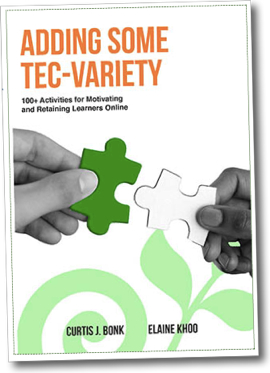
This free eText book is written by NZ and US authors and contains A LOT of strategies and tools for engaging learners in the online environment. In my opinion this book is EXCELLENT for ideas based on sound teaching and learning principles. (I would make it a required text for this module but I think you've got enough on your plate!)
Click the link to see the 10 categories of student engagement they discuss and download the free book to see their ideas.
-